
Each bodybuilder was once a beginner, and each once had his first day at the gym. Also, all experimented on themselves and for themselves. But you won’t have to after we point out the most common mistakes in the gym that you need to avoid.
What is fascinating is that in the gym, everyone is their own personal trainer; if you train in football, swimming, or similar, that is not the case.
There are personal trainers, and still, everyone does things in their own way, the way they think and see the training. Everyone seems to think they are the smartest and know best, and everyone believes everyone else is doing things wrong.
But in time, after they realize there are no results, people tend to know they are doing things wrong. The purpose of this article is to show you some of the most common mistakes that you should avoid when you first start working out at the gym.

1) Choose Your Goal And Plan How To Reach It
Before you even enter the gym as a beginner, you need to know what you want and how to achieve it. Most people, when you mention the gym, they think about the huge guys lifting 300kg or guys that are doing 20 curls while staring at their biceps.
Well, that is totally wrong! You can achieve so much in the gym, from raising your motoric skills, building muscles and burning fat, correcting your posture, and building strength.
The gym is a tool to help you achieve your goals; it’s not a goal itself. So it would help if you had a goal and a plan on how to reach it. A goal without a plan is nothing but a wish.
2) No Exercise Is Dangerous
This is so true! How many times have you heard that squats are dangerous or that deadlifting is dangerous? Well, they are not! The way you do the exercise can be dangerous and harmful for you, not the exercise itself.
There is not a single exercise that is dangerous. It can be dangerous for a certain individual at a particular time of the workout, and if they are using inadequate weights.
Those dangerous exercises are beneficial if you do them correctly, and most of the exercises that are suggested for beginners are actually those exercises.
Even though using the machines for your workout might seem safer to you, it isn’t. Why? Because we are all different with different body characteristics.
Machines condition you to move at a defined trajectory, which often is a problem with those people that are too short or too tall and similar.
Exercises with free weights are much safer than the machines if you do them correctly. The results you get are the same whether you use both machines and free weights. First, learn how to workout with weights, and then if you feel like you need to isolate a certain muscle, you can use the machines.
3) There Are No Good Or Bad Exercises
The choice of exercises and weights you use depends on what you aim to achieve with your training. This means that exercises are just the means, like a car, that transports you from point A to point B.
You are the one who chooses point B, meaning you are the one who decided which exercises are the most optimal ones to reach point B.
This means that a specific exercise can be better for you to achieve your end goal, but it doesn’t necessarily need to be the best or better than other exercises. It all depends on the goal of your training.
For someone, a certain exercise is more adequate than the other, and for you, it is not. That does not mean that it is better or worse; it just means that it is better for a certain individual at a certain time.
4) Technique
A lot of people pay too much attention to numbers, the choice of exercises, and similar. This is okay, but what matters more is how they are doing the exercises.
There are no compromises. You are either doing it correctly or trying to do it perfectly. Beginners should learn to perform exercises correctly before they worry about how much weight they can lift, how many reps to do, and similar concerns—quality before quantity.
5) Do Not Use An Advanced Program In Hope You Will Advance
Most of the programs you can find in articles are not suitable or adjusted for beginners. Beginners should not be performing advanced programs.
Beginners progress really quickly, and from training to training, they can lift more and more, while the advanced athletes need weeks to better their results by at least 5%.
Use your beginner’s advantage and advance fast by doing a program suitable for beginners.
6) Don’t Start With Too Big Exercise Volume
Start slow. Beginners need very little to progress since they are very far from their genetic potential. You will have the same results if you do two sets and if you do ten sets.
The big volume is a characteristic of advanced programs, and beginners do not need it. Advanced athletes need big volume to move from the dead point, but beginners won’t reach a dead point for a few months or even a year after they begin exercising. So all you need to do is 1 to 3 sets with an additional warm-up, no more.
7) Do Not Start With Too High Intensity
Again go slow. You can’t learn an exercise if the weights your lifting are too heavy. Start just with a bar or dumbbells. Do all the reps in a perfect form.
As soon as form starts to be wrong, reduce weights. On each training, raise the weight for 2 to 5 kg depending on the exercise.
8) Warm-up Is Very Useful And Important
The warm-up is an essential part of the workout. If you do not have time to warm up, don’t even bother training. By warm-up, we don’t mean 5 mins on a bike and some stretching.
A warm-up should prepare you for the main part of the workout, which is weightlifting, so no stretching, please. Stretching can be even more dangerous for you since it reduces the stability of certain wrists.
A warm-up can be a few corrective exercises on the floor, exercises for activation of glutes and mobility of hips, dynamic movements with a bar…
Also, you should do 3 to 4 sets with smaller weights than the ones you will use during the training, with five reps per set, no more. If you do more, you will get tired before the main part of your training.
9) Do Not Do Too many Different Exercises
If you are doing too many different exercises, you can not learn to do each of them correctly. Too many exercises are a result of a desire to try to do the entire body isolating exercises none training.
Think economically, why waste 2 hours for 15 isolating exercises when you can do 4 to 6 exercises for larger muscle groups in 45 mins.
10) Try To Fix Your Posture
When you are doing body transformation, there are three important things: gaining muscle mass, burning fat, and improving posture.
Do exercises correctly, do corrective exercises, stretch after the training. You can do corrective exercises during the warm-up or after the workout.
11) If You Are Hurt, You Can’t Lift
Forget about all that macho nonsense! If you are hurt, there are no workouts, no mass, and no fat burn. Do the exercises in perfect form and balance them for your whole body.
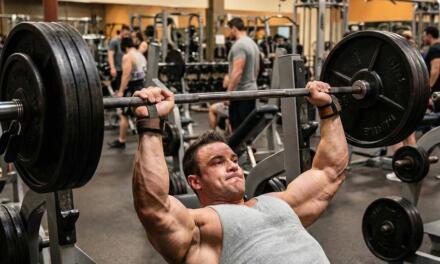
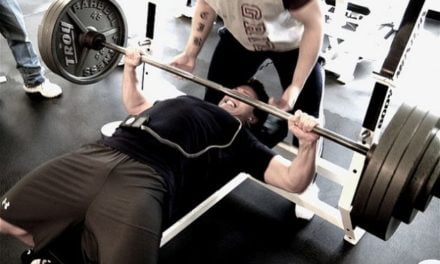
This means that you should not do bench press at each training; you should include rowing and pull-ups as well. The right choice of exercises can help you a lot with building your muscle mass long term.
12) Don’t Change The Exercises Too Often
Don’t change the exercises too often, at least not at the beginning. You will not progress if you do something different on each training, some different exercise.
Chose a few main exercises and perform them all the time until you perfect them. If you are changing the exercises all the time, you will have pain in the muscles all the time, and you will not progress at all. Be consistent.
13) Be Functionally Strong
Biceps, the size of a football, mean nothing if you can’t even do a single pull-up. DO the exercises that are functional for large muscle groups and which transfer to real life.
Do not become”all show, no go”! Only when you become functionally strong, start minding the details.
14) Don’t Workout To Muscle Atrophy
Do not workout to muscle atrophy, at least not in the beginning, and not very often. Beginners do not need this kind of workout.
It is too big a risk for beginners to get injured when doing this kind of workout. Instead of doing workouts to prevent muscle atrophy, do two or three sets of exercises in perfect form.
15) Muscle Inflammation Doesn’t Mean Growth. It means Muscle Inflammation
Many people judge the effects of a workout by the muscle inflammation they experience the next day. We do not need Inflammation to grow; it is even counterproductive.
Inflammation means you overdid it with the training. That muscle has endured an injury, and inflammatory processes are happening within the muscle, and they have nothing to do with growth.
16) A Lot Of Effort In A Bad Program Is Better Than No Effort In A Perfect One
If you are not trying and not giving your best while training, not even the best training program in the world can help you progress.
17) It Is Not Stupid Not To Know, It Is Stupid Not To Ask
You are a beginner. You will not lose your pride if you ask for advice. Just ask those who you think know what is good. Someone’s size isn’t always a sign that they can tell you what is good for you, so be clever and ask the right people.
Conclusion
There is no such thing as a perfect training program. We hope that these 17 simple tips will help beginners achieve their goals more manageable.
There are too many variables in each workout, so it is tough to give you a universal recipe for growth. Just remember one thing when you decide to start working out: when it comes to training, quality is much more important than quantity.
In the end, it is all up to you if you are determined and train hard, the results will come.